Easy Homemade Gluten Free Fettuccine Pasta Recipe
This post may contain affiliate links. As an Amazon Associate, and through other affiliate programs, I earn a small commission from qualifying purchases — at no extra cost to you. See our full disclosure policy for details.
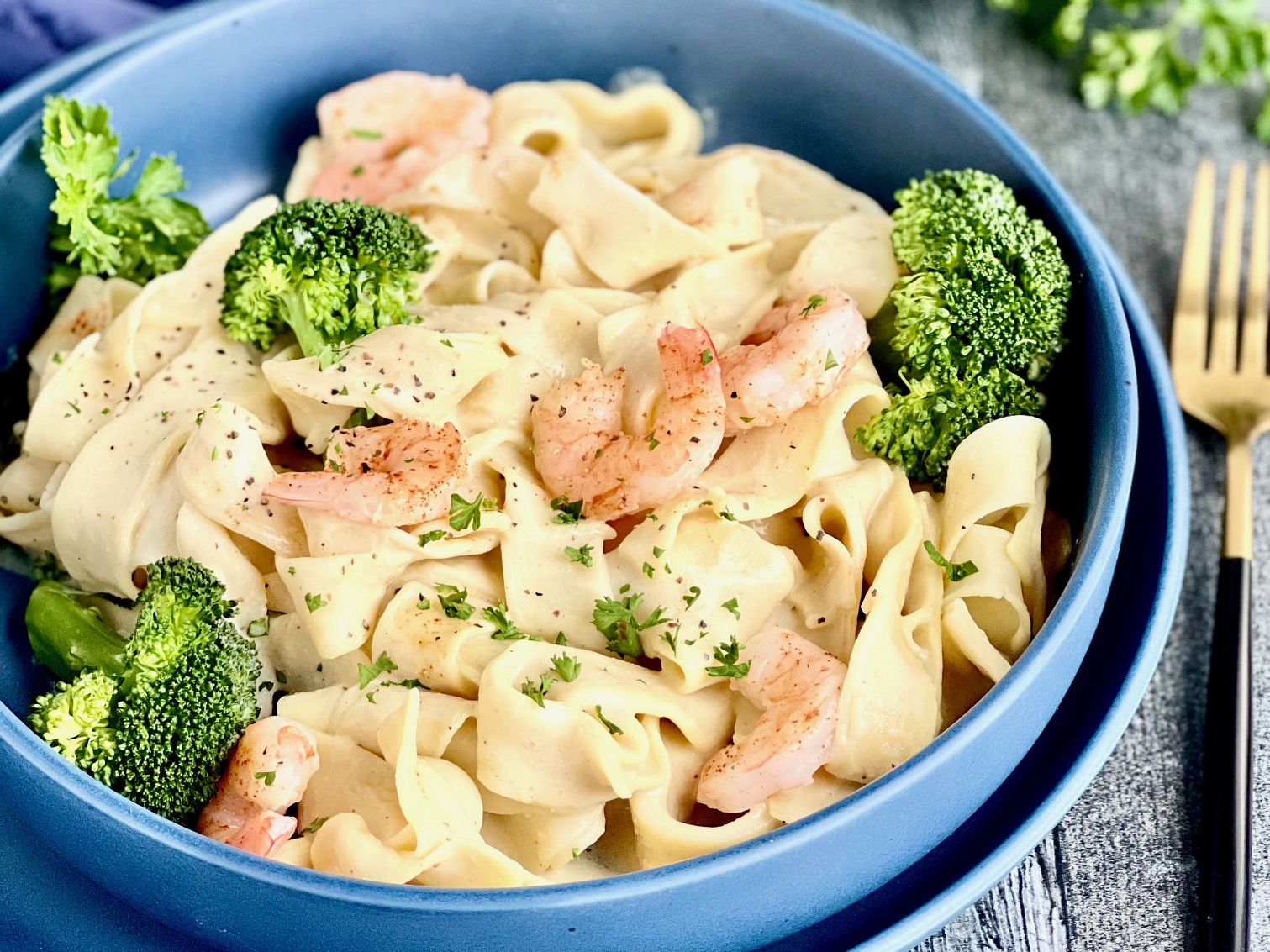
Learn to make your own easy Homemade Gluten Free Dairy Free Fettuccine Pasta with this simple recipe. You only need 4 ingredients for gluten and dairy free noodles.
Quit using store-bought gluten-free pasta and make your own homemade Gluten Free Dairy Free Fettuccine Pasta instead! Tender and soft, this fresh pasta comes together easily with a gluten-free flour blend from Charlie's Table.
We've loved using Charlie's Table's fresh artisan pasta for years, so we were thrilled when they released a flour blend home cooks could use too – and just like the rest of our recipes, this one is naturally dairy free as well.
Why make your own fresh gluten free pasta?
- It allows you to have complete control over the ingredients and ensure that there are no hidden allergens or preservatives. By using a gluten-free flour blend like Charlie's Table, you can rest assured that your pasta is safe for those with gluten sensitivities or celiac disease.
- Making your own pasta can be a fun and rewarding time in the kitchen. Plus, if you have kids, I'm sure they'll have fun making their new favorite gluten-free pasta.
- Homemade gluten-free pasta tends to have a much better creamy texture and flavor compared to store-bought alternatives. The tender and soft fettuccine noodles you can achieve with this recipe will truly elevate your pasta dishes to a new level.
- Making your own gluten-free pasta can be a cost-effective choice in the long run. While store-bought gluten-free pastas can be quite expensive (just like everything else gluten and dairy free for that matter), especially for those on a restricted diet, making your own allows you to save money without compromising on taste, quality, or safe ingredients.
- Plus with a simple recipe, you do not need a pasta machine! No expensive pasta maker necessary, just a good ol' rolling pin or pasta roller and pasta cutter, pizza cutter, or sharp knife is needed.
So why settle for store-bought gluten-free pastas when you can easily make your very own homemade Gluten Free Fettuccine Pasta? Give it a try and experience the joy of creating delicious, fresh, and gluten-free pasta in your own kitchen!
Ingredients Needed
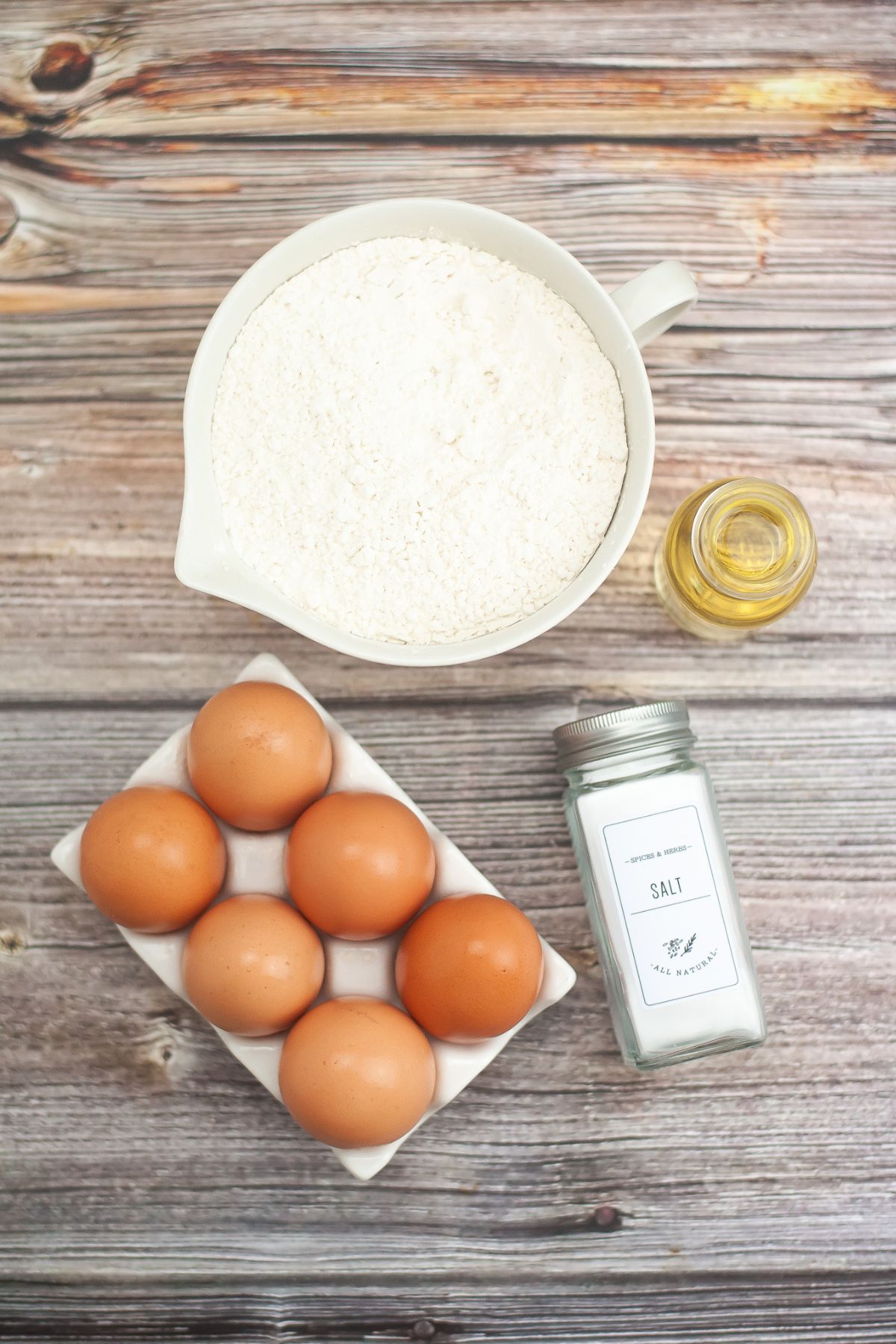
Here's a list of ingredients you need to make your own homemade fettuccine. In this section, you'll see our brand recommendations that we get asked for regularly.
Find quantities of the ingredients at the bottom of the page in the recipe card section, you'll see these ingredients paired with the instructions in a printable recipe card.
- Charlie's Table Gluten Free Pasta Flour- This is a flour blend that was formulated to make the perfect pasta
- Large Eggs- we only tested this with large eggs, anything smaller may make your dough too dry. We use farm fresh eggs but store bought will work fine.
- Salt- we use kosher salt, but feel free to use a different salt as you see fit
- Olive Oil - using a good quality olive oil, like Brightland Olive Oil, is key to a good flavored pasta
What's the best gluten free flour to use to make homemade gluten free pasta with?
We have only made this pasta recipe with Charlie's Table Pasta Flour. It's already formulated to "work". You don't have to worry about adding this or that to it since it's a blend that is made for pasta making.
According to their website, Charlie's Table Pasta Flour's ingredients are: "Gluten Free Flour Blend (Potato Starch, Millet Flour, Rice Flour, Tapioca Flour, Arrowroot), Xanthan Gum, Citrus Fiber, Salt, Spices."
Their pasta flour will have a similar texture and flavor of semolina pasta. Their pasta flour is certified gluten-free, plant-based, allergen-free and Kosher. You can find more about this product and their other products by visiting their website, checking out their FAQ section, and more.
You can buy Charlie's Table Pasta Flour directly from their website and you can use eatingglutenanddairyfree20 for 20% off your order!
Making Homemade Gluten Free Fresh Pasta Dough
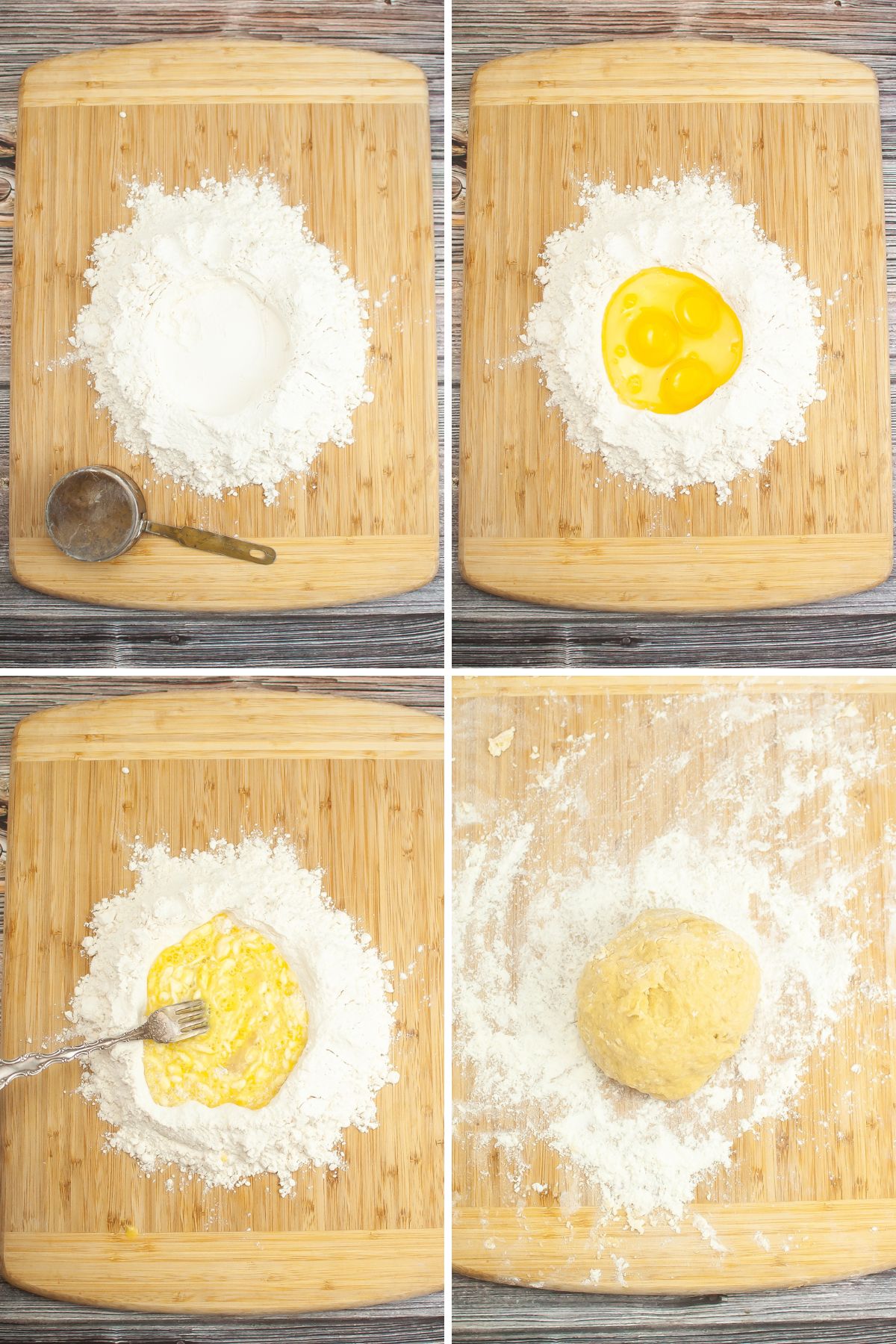
Ditch the mixing bowl because we are making this pasta dough right on the kitchen counter (or other clean, flat work space). Pour 2 ¼ cups of your flour blend on your smooth work surface.
Use the back of a wooden spoon or bowl to create a 4-inch wide well in the center of your flour pile.
Crack the eggs into the well. Add olive oil and salt to the eggs.
Use a fork to beat the egg mixture together, gradually incorporating more flour from all of the sides of your well into the mixture. Continue to mix gently so you don't destroy your well. The flour will thicken the egg mixture and start to form a shaggy dough.
Use a bench scraper or your hands to fold the mixture together until you get a nice shaggy dough ball.
Use your hands to knead the dough for 10-15 minutes, or or until it is nice and smooth in texture and elastic like. If it's still too sticky, add 1 Tablespoon of the last of the flour at a time until it's a better consistency.
It's normal for the dough to seem dry or crumbly in the beginning, but the more you knead and work it, it should end up being slightly tacky and smooth.
Use your hands to shape the dough into a ball and wrap with plastic wrap tightly.
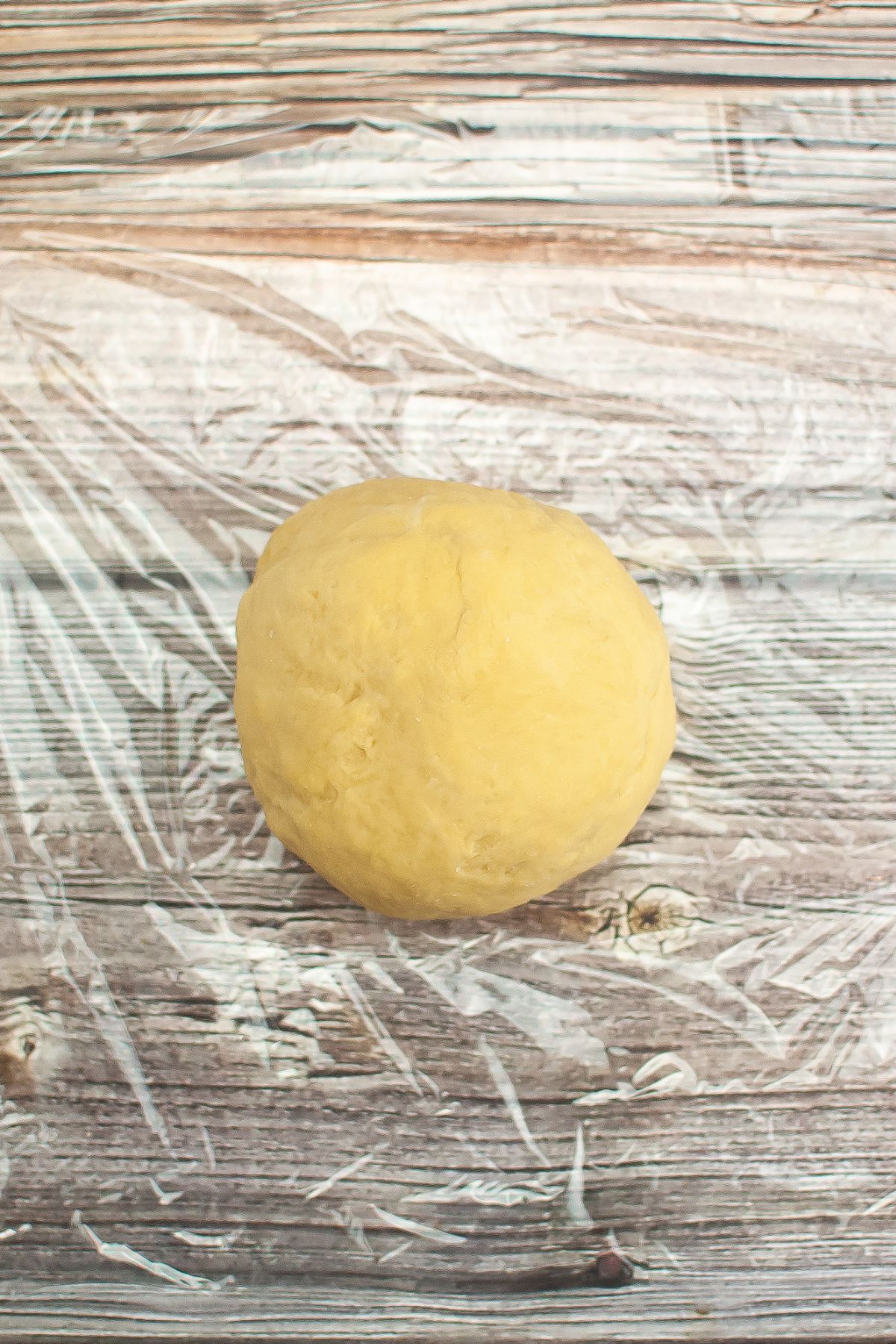
Let the dough rest at room temperature for a minimum of 30 minutes, but can rest for up to 3 hours. If you want to finish this later, you can refrigerate it for up to 24 hours. Let it come to room temperature before rolling it out though.
Rolling out your gluten free dough
Start by lightly flouring your work surface again.
If rolling dough that you just let rest at room temperature, divide it into 2-4 equal parts. If working with dough from the fridge, be sure it comes to room temperature before working with.
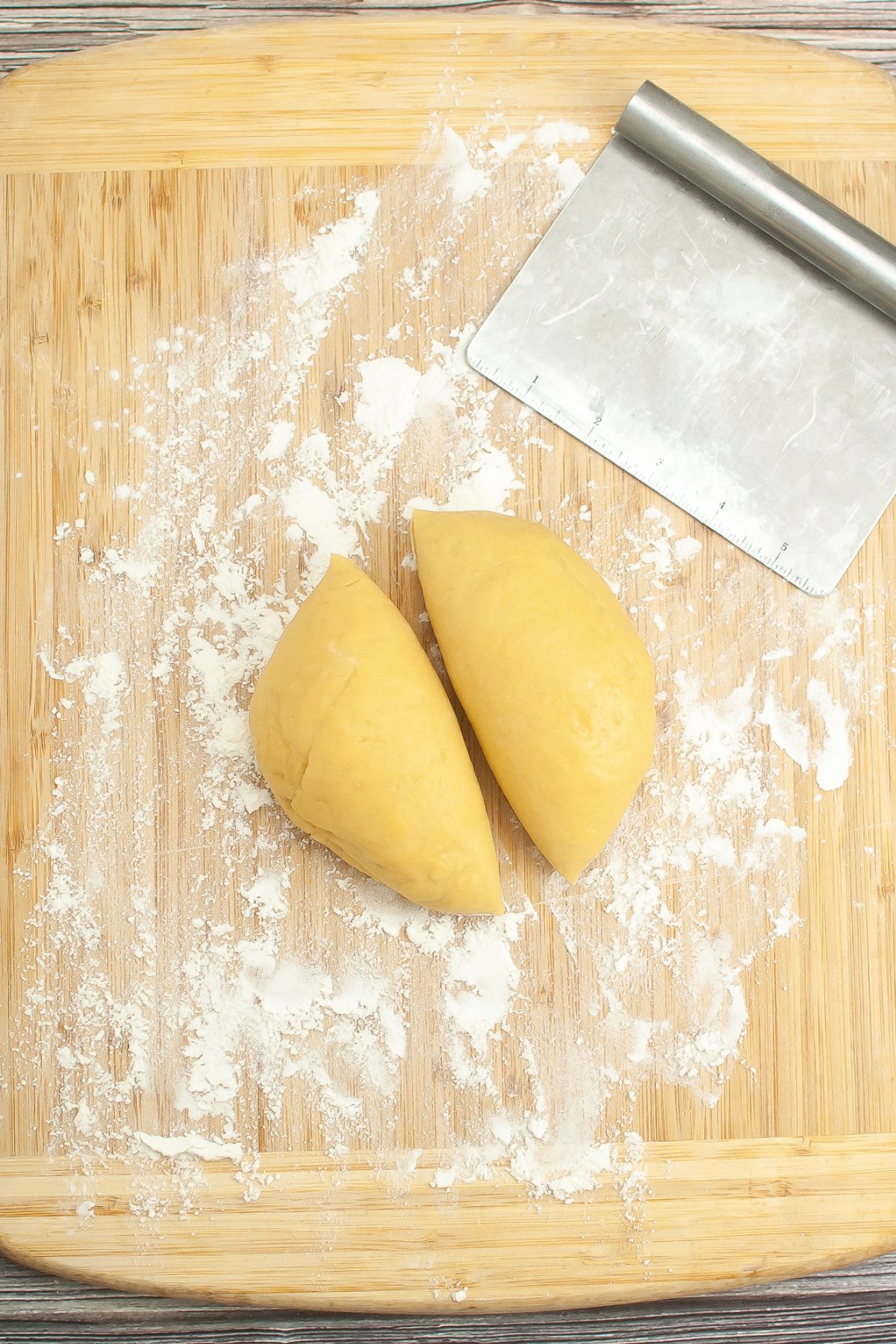
Work with one chunk at a time, use a rolling pin to roll out your dough into a ¼-inch thick rectangle pasta sheet. Sprinkle the rectangle with a little flour.

Cutting your dough into pasta shapes
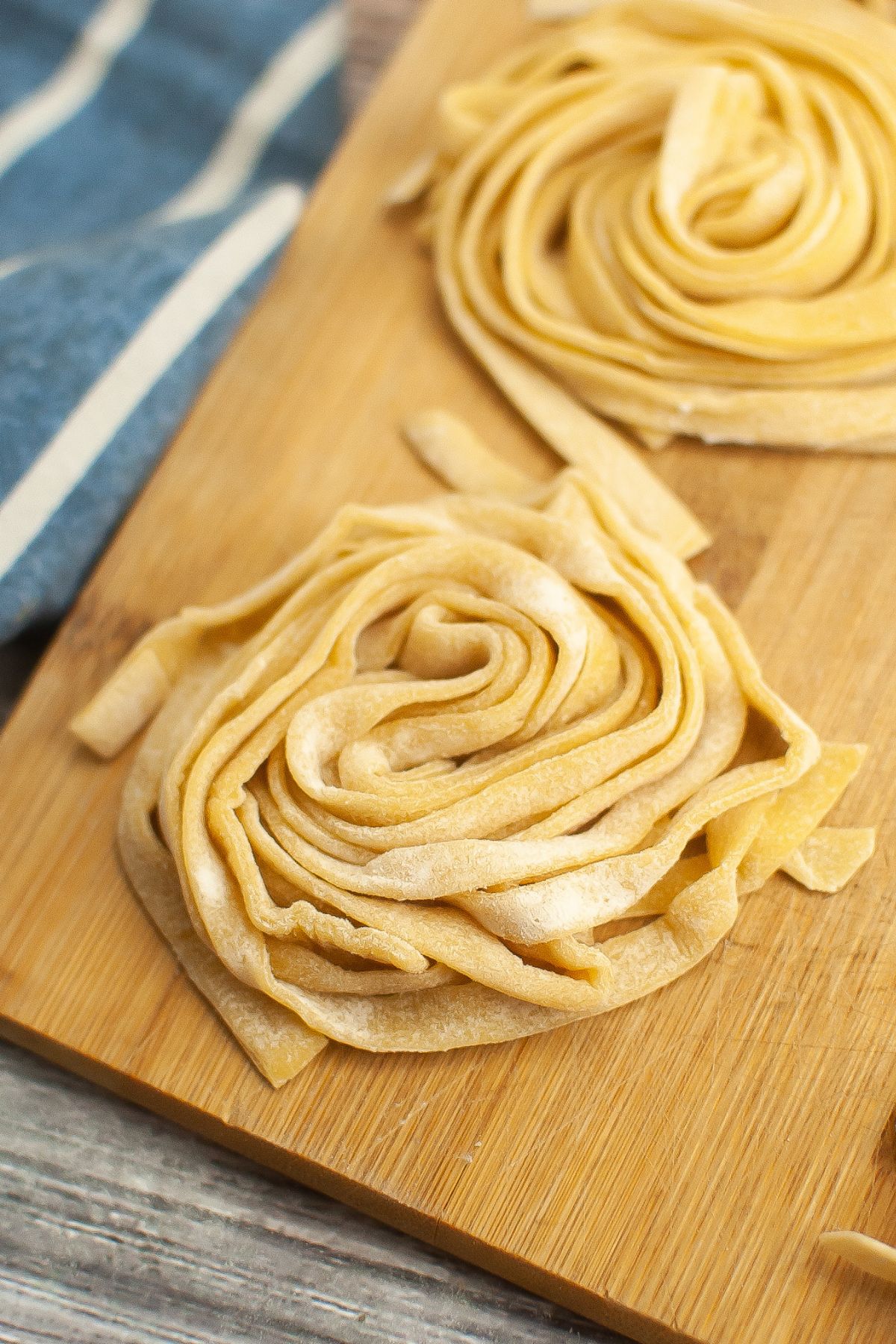
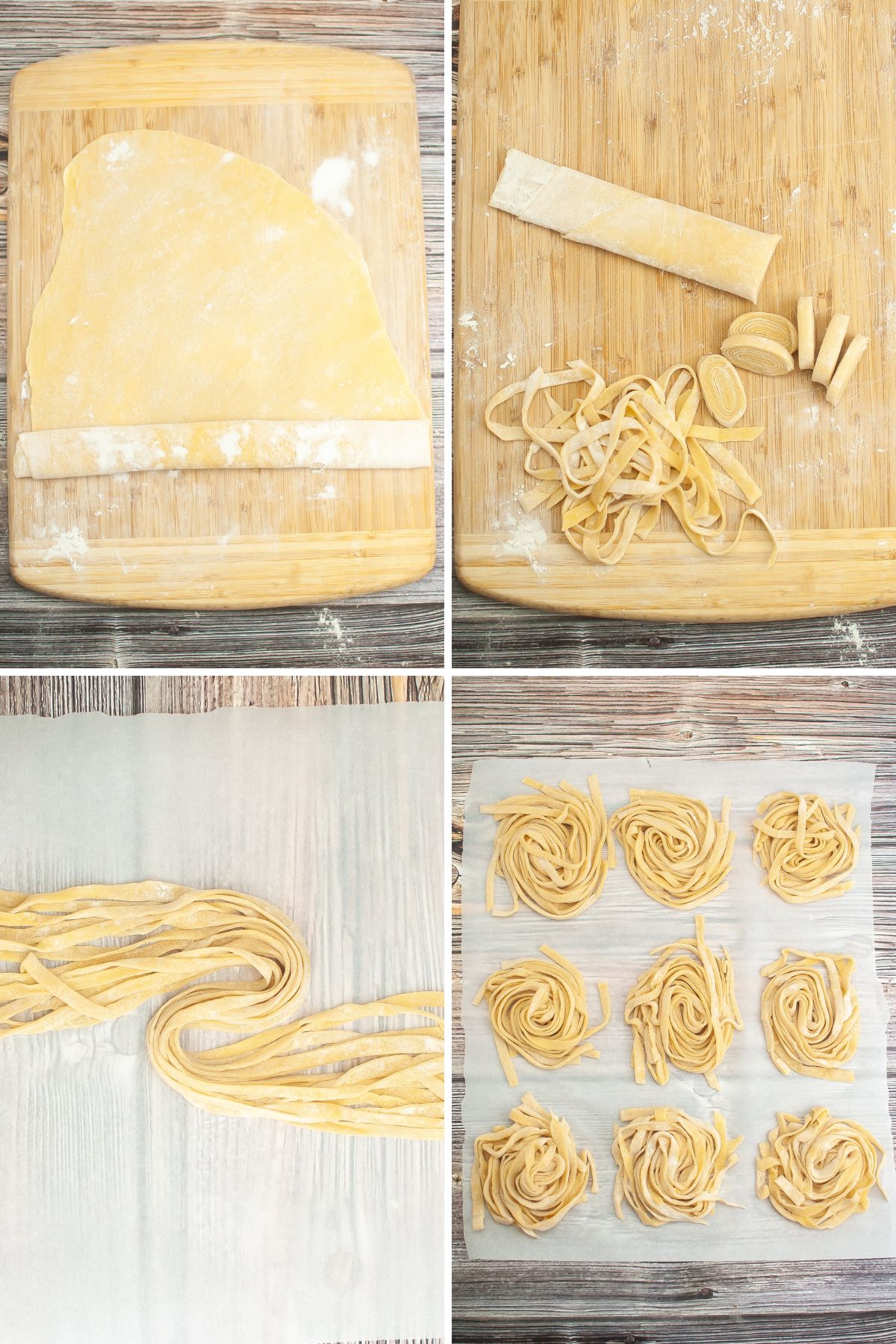
Fold each sheet into 1-3" folds and cut into ⅛-inch pasta sections.
Once you've cut them, unravel or unroll each section to become cut noodles.
Cooking homemade gluten free pasta from scratch
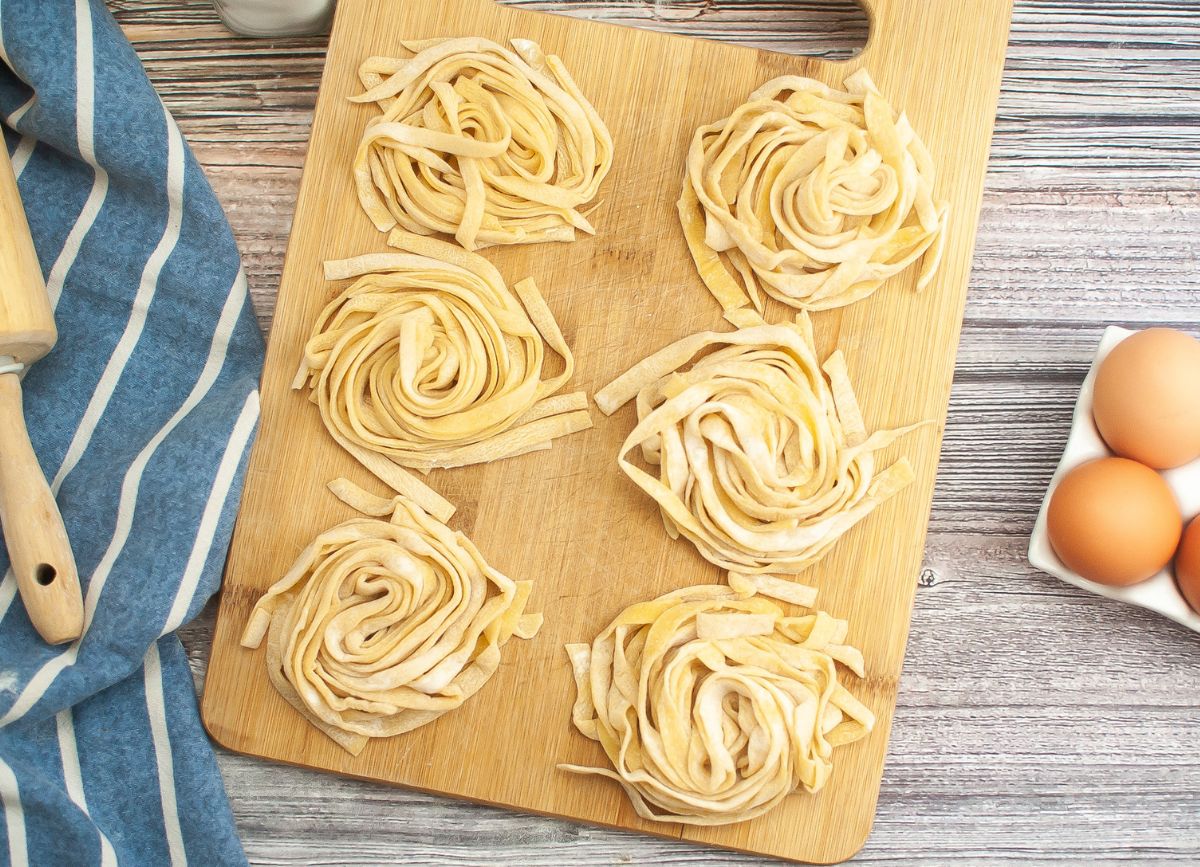
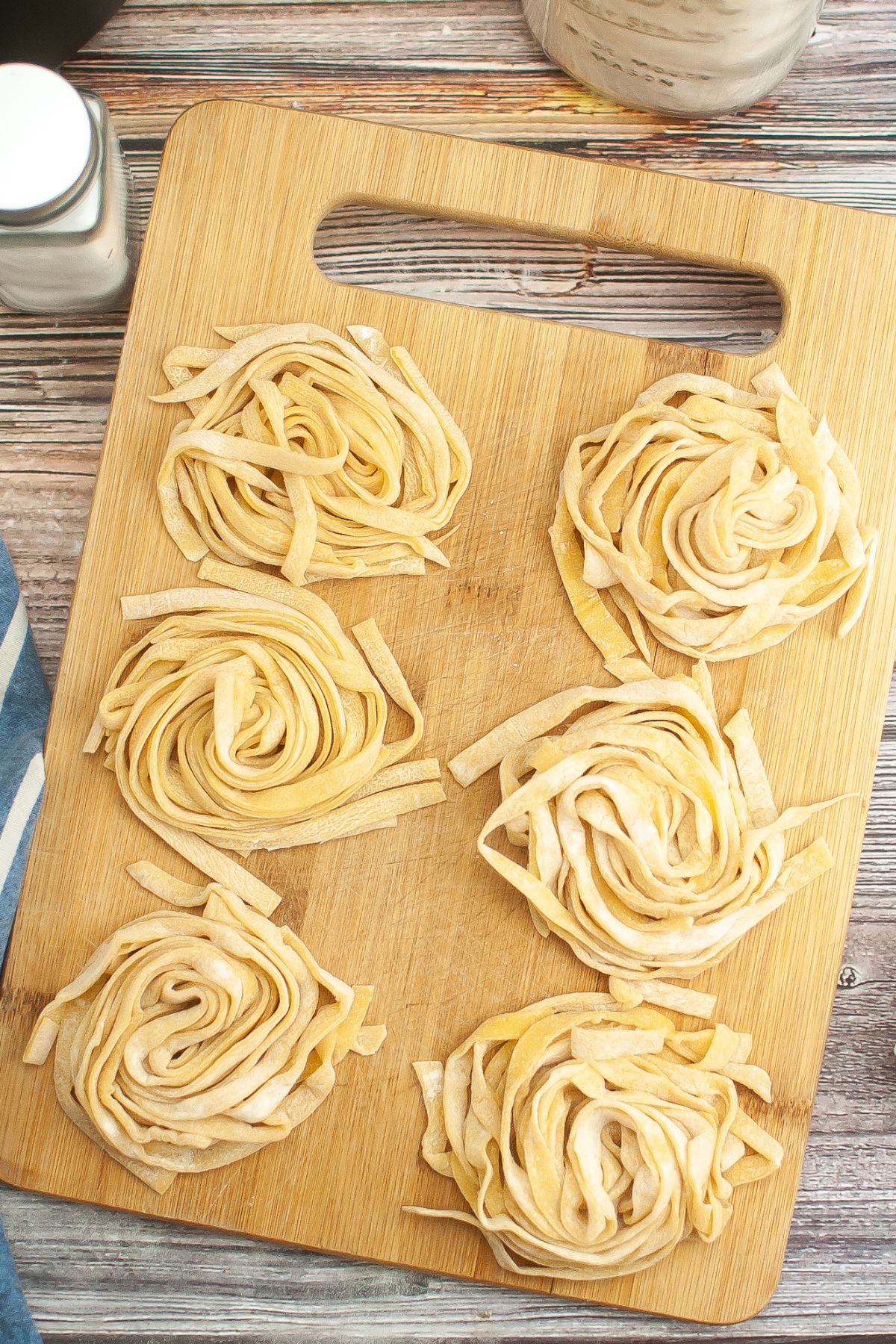
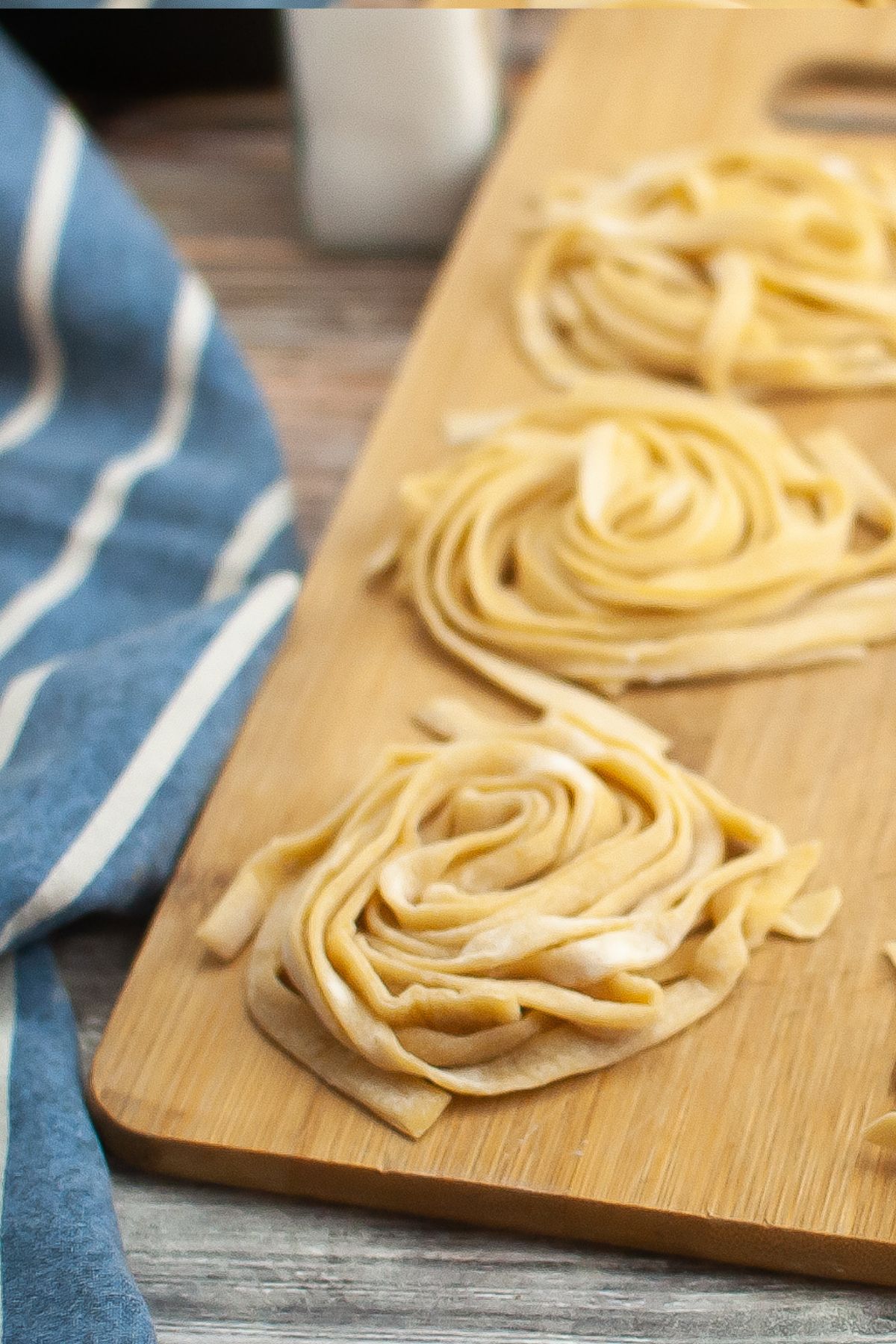
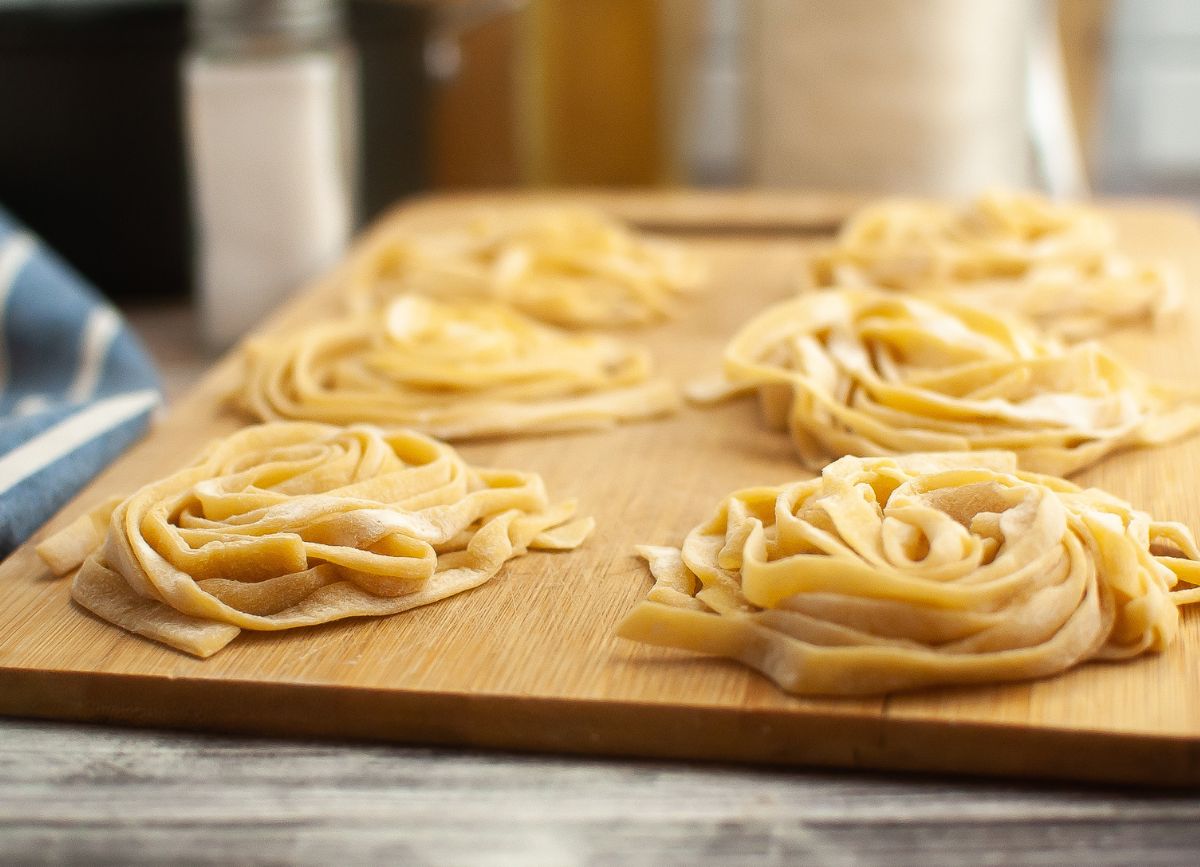
Once you've cut your pasta, you can form small mounds or nests of noodles on a parchment-lined baking sheet and store or cook.
Boil a pot of water, salt it to taste and add your fresh pasta carefully. Stir as it cooks for about 3-5 minutes, or until tender.
Please keep in mind that the cooking time required can vary greatly depending on the size of your pasta noodles and the shape of the noodles that you cut. Start with less time, check the texture and doneness of the pasta and proceed as you see necessary.
Making fresh gluten-free pasta with pasta maker
Follow the instructions to make the gluten free pasta dough as you would if rolling by hand.
If you don't want to spend the time rolling it out by hand, and you have a pasta machine on hand then feel free to run your pasta through your pasta machine to flatten the dough out faster and make your pasta that way.
If your pasta maker has a cut setting, you can cut it using that as well.
Storage
Fresh made pasta is absolutely best on the day that you make it, in our opinion. However, you can choose to store leftovers of this great recipe if desired.
Store your leftover homemade pasta in an airtight container in the refrigerator for up to 3 days.
Recipe Tips
- Don't overwork the dough.
- Don't skip the resting period when making the dough.
- You don't need to dry your pasta.
- Store the pasta appropriately so it stays fresh as long as possible.
Recipe Variations
- Herb Pasta: Mix 1-2 teaspoons of dried Italian herbs into the dough for extra flavor.
- Colorful Pasta: Add a tablespoon of tomato paste or spinach puree to the eggs for colored noodles.
- Different Shapes: Use this same dough to make pappardelle, lasagna sheets, or ravioli instead of fettuccine.
- Egg-Free: We haven't found an egg replacer that works well in this recipe, so if you need egg-free pasta, look for a store-bought gluten and dairy free option instead.
Frequently Asked Questions
We have a hard time resisting the urge to not make the dough, cook it, and eat it right then and there! But if you want to make the dough and store it in a wrapped ball in a container, it should last up to a day before it needs to be cooked.
Yes! We've had great success freezing the uncooked pasta – shape it into nests, flash freeze them, then transfer to a freezer-safe container for up to a month.
You can also freeze it after cooking it al dente, then finish cooking it a bit more when you're ready to use it again. Cooking it al dente before freezing helps keep it from getting mushy when you reheat or finish it later.
We don't see why not! Wrap the ball of dough tightly in cling wrap, place it in a freezer-safe zip-top bag with the air removed, and store it for up to 1-2 months.
Thaw the dough before rolling it out into pasta sheets on a lightly floured surface and cutting it.
We've only tested this recipe with Charlie's Table Pasta Flour, which already contains xanthan gum, so you don't need to add any more. Xanthan gum acts as a binding agent that helps keep gluten free pasta from falling apart and gives it a texture similar to what gluten provides in traditional pasta.
If you're using a different flour blend, check whether it already contains xanthan or guar gum. Xanthan gum can irritate some people with food sensitivities – if you can't tolerate it, you may be able to experiment with a blend using guar gum or another binder, but we haven't tested that ourselves.
Carefully sprinkle just a little more flour down and work it into your dough. Start with a small amount and gradually add more until you reach your desired consistency.
We tried making this with a few different egg replacers and it just didn't turn out. Real eggs are what work best with this specific recipe, so if you're vegan or have an egg allergy, unfortunately this recipe isn't for you.
Sure! While this simple gluten-free pasta already has a bit of salt in it, you can add whatever other spices and seasonings you enjoy. Try sprinkling in some garlic powder if you're making gluten-free fettuccine alfredo – get creative and follow your tummy's desires.
There can be a variety of reasons this happens, but one of the biggest culprits is dough that's too dry. You want your dough hydrated – not soaking wet, but not brittle-dry either – so avoid working too much extra flour in as you roll and knead.
Also make sure you're using appropriately sized eggs. We use large eggs; smaller eggs can make your dough too dry and more likely to break.
Serve it with any of your favorite sauces. Our Sundried Tomato Alfredo sauce pairs perfectly with it, or try a traditional homemade alfredo (dairy free too!) with chicken, peas, and mushrooms for a full dinner.
Pin It For Later
Want More Gluten and Dairy Free Pasta Recipes?
- Try this same dough in our Gluten Free Spaghetti Carbonara.
- We're hoping to try homemade lasagna noodles next to amp up our Gluten Free Lasagna – a must-make if you haven't had it yet!
- Try our Spaghetti Pie, we love using other artisan pasta from Charlie's Table in that too.

Easy Homemade Gluten Free Fettuccine Pasta Recipe
Ingredients
- 2 ½ cups gluten free pasta flour see post for brand suggestion
- 3 large eggs
- ½ teaspoon salt
- 1 tablespoons olive oil
Instructions
Making Homemade Gluten Free Fresh Pasta Dough
- Ditch the mixing bowl because we are making this pasta dough right on the kitchen counter (or other clean, flat work space). Pour 2 ¼ cups of your flour blend on your smooth work surface.
- Use the back of a wooden soon or bowl to create a 4-inch wide well in the center of your flour pile.
- Crack the eggs into the well. Add olive oil and salt to the eggs.
- Use a fork to beat the egg mixture together, gradually incorporating more flour from all of the sides of your well into the mixture. Continue to mix gently so you don't destroy your well. The flour will thicken the egg mixture and start to form a shaggy dough.
- Use a bench scraper or your hands to fold the mixture together until you get a nice shaggy dough ball.
- Use your hands to knead the dough for 10-15 minutes, or or until it is nice and smooth in texture and elastic like. If it's still too sticky, add 1 Tablespoon of the last of the flour at a time until it's a better consistency.
- It's normal for the dough to seem dry or crumbly in the beginning, but the more you knead and work it, it should end up being slightly tacky and smooth.
- Use your hands to shape the dough into a ball and wrap with plastic wrap tightly.
- Let the dough rest at room temperature for a minimum of 30 minutes, but can rest for up to 3 hours. If you want to finish this later, you can refrigerate it for up to 24 hours. Let it come to room temperature before rolling it out though.
Rolling out your gluten free dough
- Start by lightly flouring your work surface again.
- If rolling dough that you just let rest at room temperature, divide it into 2-4 equal parts. If working with dough from the fridge, be sure it comes to room temperature before working with.
- Work with one chunk at a time, use a rolling pin to roll out your dough into a ¼-inch thick rectangle pasta sheet. Sprinkle the rectangle with a little flour.
Cutting your dough into pasta shapes
- Fold each sheet into 1-3" folds and cut into ⅛-inch pasta sections.
- Once you've cut them, unravel or unroll each section to become cut noodles.
Cooking homemade gluten free pasta from scratch
- Once you've cut your pasta, you can form small mounds or nests of noodles on a parchment-lined baking sheet and store or cook.
- Boil a pot of water, salt it to taste and add your fresh pasta carefully. Stir as it cooks for about 3-5 minutes, or until tender.
Notes
- Please keep in mind that the cooking time required can vary greatly depending on the size of your pasta noodles and the shape of the noodles that you cut. Start with less time, check the texture and doneness of the pasta and proceed as you see necessary.
- This recipe makes 1 pound of pasta, which is anywhere from 4-6 servings.
- The time required to make this recipe may vary depending on how long you let the dough rest and how long you cook the pasta for.
- Nutritional Facts will vary depending on brands that you choose. The info shared here is purely calculated via a computer with general info. Use an app that you can specify your specific gluten free safe brands to determine nutritional info.
Nutrition
Nutritional Disclaimer
These Nutritional Facts are ESTIMATED. Your actual nutritional info with this recipe may vary depending on the brands you choose. “Eating Gluten and Dairy Free” is not a registered dietician or nutritionist. The provided nutritional info above is based on a generic calculator, if you want more accurate info, use your nutritional calculator of choice where you can choose brands and get more info that way.
Never Run Out of Safe Recipes
Loved this recipe? Our cookbooks are packed with tested, family-approved gluten & dairy free recipes so you never have to hunt for a safe one again. The Holiday Recipes Cookbook has 50+ recipes for every season, and The Classics has our all-time family favorites.